
Emotional Witnessing: Supervisory and Clinical Encounters on the Affective Edge.
Live Webinar
Join Dr Roy Barsness: Founder and Executive Director of the Contemporary Psychodynamic Institute for an engaging seminar centered on his new book, Psychodynamic Supervision: In a New Key (Routledge, 2025).
Discover a new language of supervision, one grounded in mutual engagement, emotional depth, and transformative dialogue.
Moving beyond the traditional, authority-driven model of supervision, this approach embraces a co-constructed, affect-focused process that honours the therapist’s firsthand knowledge of the patient and the immersion of the supervisor’s own subjectivity within the supervision process.

Conventional supervisory relationships follow a teaching model, where the more clinically experienced supervisor assumes the role of advisor, evaluator, and expert. In this traditional framework, supervision leans heavily toward cognitive analysis and case formulation, privileging theoretical knowledge and diagnostic reasoning. Although contemporary psychoanalytic models of supervision increasingly challenge this hierarchical approach, they too most often default into supervisory practices that continue to position the supervisor as the authority and gatekeeper of truth.
This seminar centers on Dr Barsness’s new book, Psychodynamic Supervision: In a New Key (Routledge, 2025), which proposes a fresh new model rooted in contemporary psychoanalytic theory that emphasises the co-constructed nature of the supervisory relationship. This approach recognises the therapist as holding primary, firsthand knowledge of the patient. In contrast to traditional models, it then becomes the supervisor’s responsibility to immerse themselves in the patient’s narrative - as conveyed through the therapist’s affective experience—to also attend to the affective states elicited within themselves—and to bring an experienced, reflective stance rooted in their own subjectivity to the supervisory conversation. At the intersection of these two subjectivities, a richer perspective emerges—one that brings to the light lapses in affective attunement, the power of the therapeutic use of self, enactments and breakdowns within the treatment.
This model shifts emphasis from cognition to affect, privileging the therapist’s subjectivity as the principal access point to the patient’s internal and relational world. The supervisor’s subjectivity is equally engaged, with the patient no longer seen as an object of analysis but as a source of inspiration that expands the supervisee’s understanding. This immersive process calls for a new language—one that moves beyond interpretation as the primary mode of communication and toward a more nuanced, emotionally grounded dialogue.
In this supervisory paradigm, traditional cognitive formulations give way to an attuned capacity to metabolize affective and intuitive responses, drawing on the dynamic “data” that emerges in the intersubjective field between therapist and patient. Participants learn how to track and process their emotional responses by linking their affective experiences to their understanding of the patient’s history and by identifying the ways in which the patient’s narrative patterns repeat within the therapeutic relationship itself.

Details
Facilitator:
Dr Roy Barsness
Where & when:
- Saturday, 11 July 2026
- Online
- 8:00 am - 11:00 am Brisbane time (AEST)
- Cost: $180 (plus GST - Australia)
If you're interested in attending this seminar, please complete the online form by clicking the 'Register Here' button below.
For more information, please contact training@iipt.com.au
Our core belief is that through authentic relationship we become more fully alive and that when the self of the therapist is enlivened, the therapy enlivens, and that enlivens the client, who in turn enlivens their community.
Contemporary Psychodynamic Institute
Learning Objectives
- Assess and critique a new model of supervision grounded in relational psychoanalysis in contrast to the more common supervisory process that offers cognitive case formulations of the presenting case.
- Develop a new language moving from interpretation into complex dialogue.
- Discuss the ethical implications of non-disclosure and the possibility of violation of professional integrity through withholding and anonymity.
- Apply the principles of the new supervisory method (referred to as M – Muse; A- Affect; M- metabolization; A- articulation and L- Learning) in their supervisory practices.
- Evaluate how the supervisory model is also useful and applicable to one’s clinical practices.
Summary
This webinar introduces a contemporary psychodynamic approach to supervision that is grounded in emotional witnessing, affective attunement, and reflective dialogue. Drawing on Dr Roy Barsness’s book Psychodynamic Supervision: In a New Key (Routledge, 2025), the seminar explores supervision as a co-constructed process rather than a purely expert-led or interpretive one. Participants will consider how affect, therapist subjectivity, and supervisor subjectivity can be used to deepen understanding of clinical work and strengthen both supervisory and therapeutic practice.
References
Barsness, R. (2025). Psychodynamic Supervision Theory and Practices: In a New Key. London. Routledge. London. Routledge.
Barsness, R. (2018). (Ed.) Core Competencies in Relational Psychoanalysis: A guide to Research, Study and Practice. London. Routledge.
McWilliams, N. (2021). Psychoanalytic Supervision. Guilford Press. NY.
Bass, T., Hoffman., McWilliams, L., Schmolke, M. (2023). Supervision and Psychoanalysis. London. Routledge
Dr. Roy Barsness
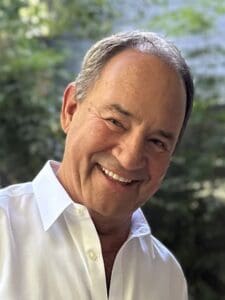
Founder and Executive Director of the Contemporary Psychodynamic Institute
Dr Roy Barsness is the author of the text, Core Competencies in Relational Psychoanalysis: A Guide to Practice, Study and Research (Routledge, 2018) and author of the text, Psychodynamic Supervision: In a New Key (Routledge, 2025). He has published several professional articles, presents frequently at professional conferences and teaches nationally and internationally on relational psychoanalysis. He is the Founder and Director of the Contemporary Psychodynamic Institute, former Professor of Psychology and Academic Dean at The Seattle School of Theology and Psychology. He was formerly the Clinical Director of the Clinical Psychology Program at Seattle Pacific University and Clinical Associate Professor at the University of Washington School of Medicine. Dr Barsness has been in independent practice for over thirty-five years.
